Antalya Hadrian's Gate

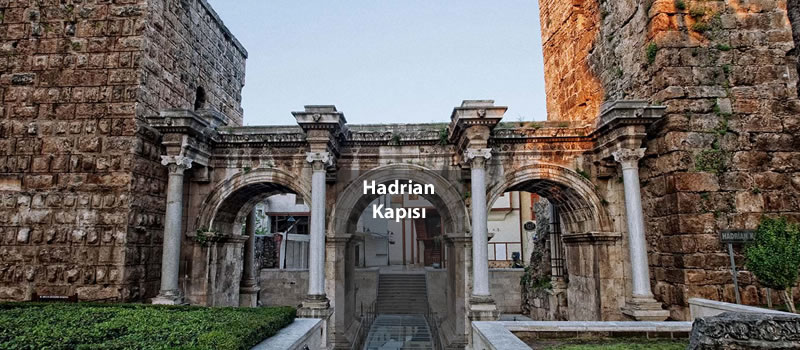
Walking along Antalya's modern streets, the magnificent marble structure that suddenly appears before you takes you not just to a street, but to a time 1900 years ago. Known locally as Üçkapılar (Three Gates), Hadrian's Gate is Antalya's best-preserved ancient monument and a magical gateway to Kaleiçi, the heart of the city.
Here is a brief portrait of this unique structure that carries the elegance of Rome to the present day.

Built in 130 AD in honor of Roman Emperor Hadrian's visit to Antalya, this gate is part of the city walls. At that time, it was a Roman tradition to build such monumental gates to celebrate the arrival of emperors. Because the gate remained hidden behind the walls for centuries, it has managed to survive to this day without significant damage.
Hadrian's Gate consists of three magnificent arches from which it takes its name. Made entirely of white marble, the gate is dazzling with its craftsmanship:
Corinthian Style: The columns on the front and rear facades of the gate are decorated with Corinthian capitals, the most elegant architectural style of the period.
Reliefs: The floral and fruit reliefs on the ceiling and inside the arches reflect the attention to detail of Roman art.
Towers: Two towers from different periods rise on either side of the gate. The Julia Sancta Tower to the south dates back to the ancient Roman period, while the one to the north, with an inscription from the Seljuk period, summarizes the city's multicultural structure.
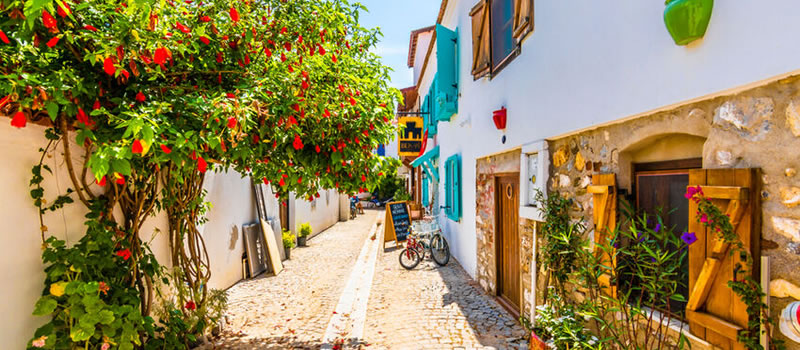
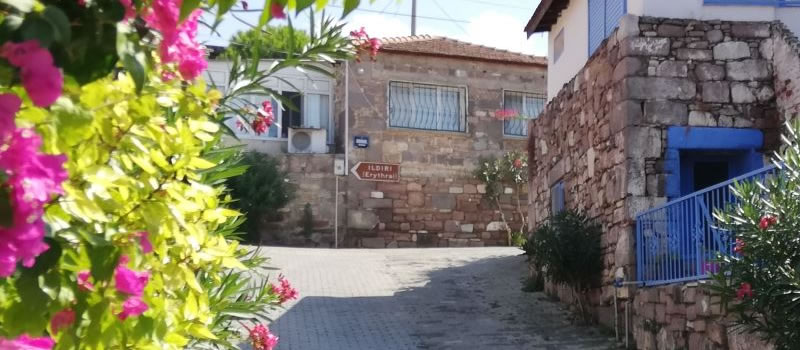
What makes Hadrian's Gate special is not only its stones, but also its function. The moment you pass under the gate, you leave behind Antalya's modern, crowded, and noisy streets. The place you step into is the fairytale Kaleiçi, with its narrow streets, historic stone houses, and boutique hotels adorned with bougainvillea.
As you pass through the glass partitions on the ground floor, preserving the wheel tracks of ancient horse-drawn carriages, you feel as if you are part of a journey spanning thousands of years.
Here is a brief portrait of this unique structure that carries the elegance of Rome to the present day.
1. In Honor of the Emperor: The Legacy of a Visit
Built in 130 AD in honor of Roman Emperor Hadrian's visit to Antalya, this gate is part of the city walls. At that time, it was a Roman tradition to build such monumental gates to celebrate the arrival of emperors. Because the gate remained hidden behind the walls for centuries, it has managed to survive to this day without significant damage.
2. Architectural Splendor: Three Arches and Corinthian Capitals
Hadrian's Gate consists of three magnificent arches from which it takes its name. Made entirely of white marble, the gate is dazzling with its craftsmanship:
Corinthian Style: The columns on the front and rear facades of the gate are decorated with Corinthian capitals, the most elegant architectural style of the period.
Reliefs: The floral and fruit reliefs on the ceiling and inside the arches reflect the attention to detail of Roman art.
Towers: Two towers from different periods rise on either side of the gate. The Julia Sancta Tower to the south dates back to the ancient Roman period, while the one to the north, with an inscription from the Seljuk period, summarizes the city's multicultural structure.
3. The Threshold Between Two Worlds
What makes Hadrian's Gate special is not only its stones, but also its function. The moment you pass under the gate, you leave behind Antalya's modern, crowded, and noisy streets. The place you step into is the fairytale Kaleiçi, with its narrow streets, historic stone houses, and boutique hotels adorned with bougainvillea.
As you pass through the glass partitions on the ground floor, preserving the wheel tracks of ancient horse-drawn carriages, you feel as if you are part of a journey spanning thousands of years.