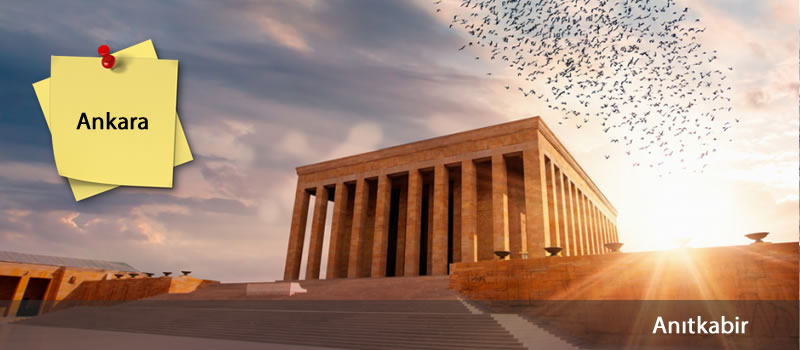
The construction of Anıtkabir, an expression of the Turkish nation's gratitude to Atatürk, began in 1944 and was completed in 1953. Its design was chosen from among 47 entries in a worldwide competition by Turkish architects Prof. Emin Onat and Assoc. Prof. Orhan Arda.
The structure is the most magnificent example of the "Second National Architecture Period." A modern synthesis of Seljuk and Ottoman architectural elements, Anıtkabir also alludes to the ancient civilizations of Anatolia (Hittite, Phrygian) spanning thousands of years.
Architectural Sections and Symbolism
Anıtkabir consists of three main sections, each containing a separate meaning:
Lion's Path:
This 262-meter-long path, which prepares visitors for Atatürk's resting place, is adorned with 24 lion statues on either side. The 24 lions represent the 24 Oghuz tribes. The lions lying down symbolizes the peaceful nature of the Turkish nation. The stones of the path are spaced out to encourage visitors to walk with their heads bowed (as if in a moment of respect).
Ceremonial Square:
This area, with a capacity of 15,000 people, is notable for its paving stones adorned with Turkish rug motifs. The columns surrounding the square resemble an embrace.
Hall of Honor (Mausoleum):
This is the most sacred section of Anıtkabir. Atatürk's symbolic sarcophagus is located here. The mosaics on the ceiling are inspired by 15th and 16th-century Ottoman rug patterns. Atatürk's remains are located in a burial chamber dug directly into the ground, directly below this section, in the soil of his homeland.
Peace Park: The Colors of the World in Ankara
Created based on Atatürk's principle of "Peace at home, peace in the world," the Peace Park was formed with trees sent from all over the world and from every province of Turkey. Today, thousands of plant and tree species from 24 different countries live together in friendship and peace in this park.
Historical and Spiritual Value
Anıtkabir is not just a pile of stone and marble. It is the seal of a nation's rebirth from the ashes and its journey towards modernization. Visited by millions of people every year, this place is the center of mourning on November 10th, and of enthusiasm and devotion on national holidays such as October 29th and August 30th.
"My humble body will one day be buried in the earth, but the Republic of Turkey will endure forever." — Mustafa Kemal Atatürk